TRAVEL TO TATA CITY
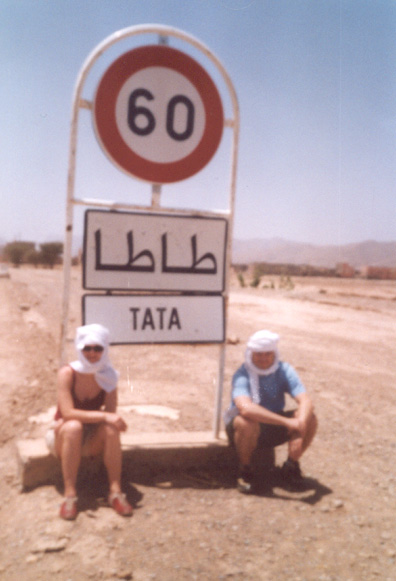
Historical monuments: Tata region is characterized with rich archaeological witness stand
On the ancient history of civilization, and tells the visitor experiences
And the prospects for the region's human, is the most prominent of such historical monuments as follows:
(A) the effects of sites of prehistoric: been identified a significant number of
Archaeological sites dating back to prehistoric times along the Draa Valley.
These sites contain significant quantities of stone tools
Manufactured by prehistoric man from clay.
Have been used for different purposes related to various sizes and forms,
It is similar to other stone tools in prehistoric sites in Morocco.
These tools are a polished stones
Chalskakin used for cutting or for hunting headings spears and arrows,
In addition to their use as tools for repair of animal skins
Or drilling and engraving on the stone. Despite the lack of adequate information
Private makers of these tools and the evolution of the conditions of their lives
And livelihood as a result of the lack of in-depth studies in this area,
Some preliminary observations of these pieces of stone reclaimed confirmed
Belonging to the Paleolithic which could be up to date
More than one million years BC It is clear from space
The vast geographical area covered by the sites of this age along the basin
Draa Valley province that did not know Tata stable human
Since more than a million years, but also knew the presence and intense
The human element widely, although this indicates something
It shows on the availability of highly favorable living conditions in the region at the time
Allowed for a person to get his belongings adequate water
The food in the rainforest environment and grassy Perhaps what confirms this subtraction fees engraved
Rock on a number of important sites along the
Mount builder and aspects of the Draa River. Among these fees
Kalfelh a variety of animals, giraffes, deer,
Bull, rhino, Ghazal, antelope, ostrich ... They suggest what was
It is full of water and the region of forests in the prehistoric period.
This is a fee or rock carvings in addition to stone tools
One of the most important landmarks of cultural heritage that abound in the region.
Among the most important sites, which hosts a significant number of rock inscriptions mention
For example: sites surrounding groups Tkzimirt
, Addis, Cardan or near the center of the region, neighboring sites for groups Tmanart,
Mr. Abdullah bin Mubarak, Tazonin, Ait, Abley,
Municipalities Aqa mouth fortress of the Department of Aqa Add
To the sites of the two groups Tcent and Kom Department Zguid mouth.
If the underlying theme prominent on the rocks engraved portrays us
Animals, Vantrivh portray the latter vary from one location to another.
Vahjammeha may be small or large decorated with lines and dots or polished.
And there are other inscriptions depicting scenes of hunting or see where people
A group of men in the hunt for an animal or a herd of animals.
And viewers are given the task of expressing ways of fishing,
One of the salient activities that marked the life of a human being Neolithic
(7000 to 2000 BC). While some of
Other inscriptions are particularly important because they represent characters from
Amazigh ancient writing known as Tevenag.
And Bapetkarh to this new way of communicating the region may be a human being
It came out of the prehistoric period to the historic

Aucun commentaire:
Enregistrer un commentaire